From the Crafto desk Making cost
Cost the firing, not just the clay
By Crafto DeskRead time: 4 minutesGoes with: Products
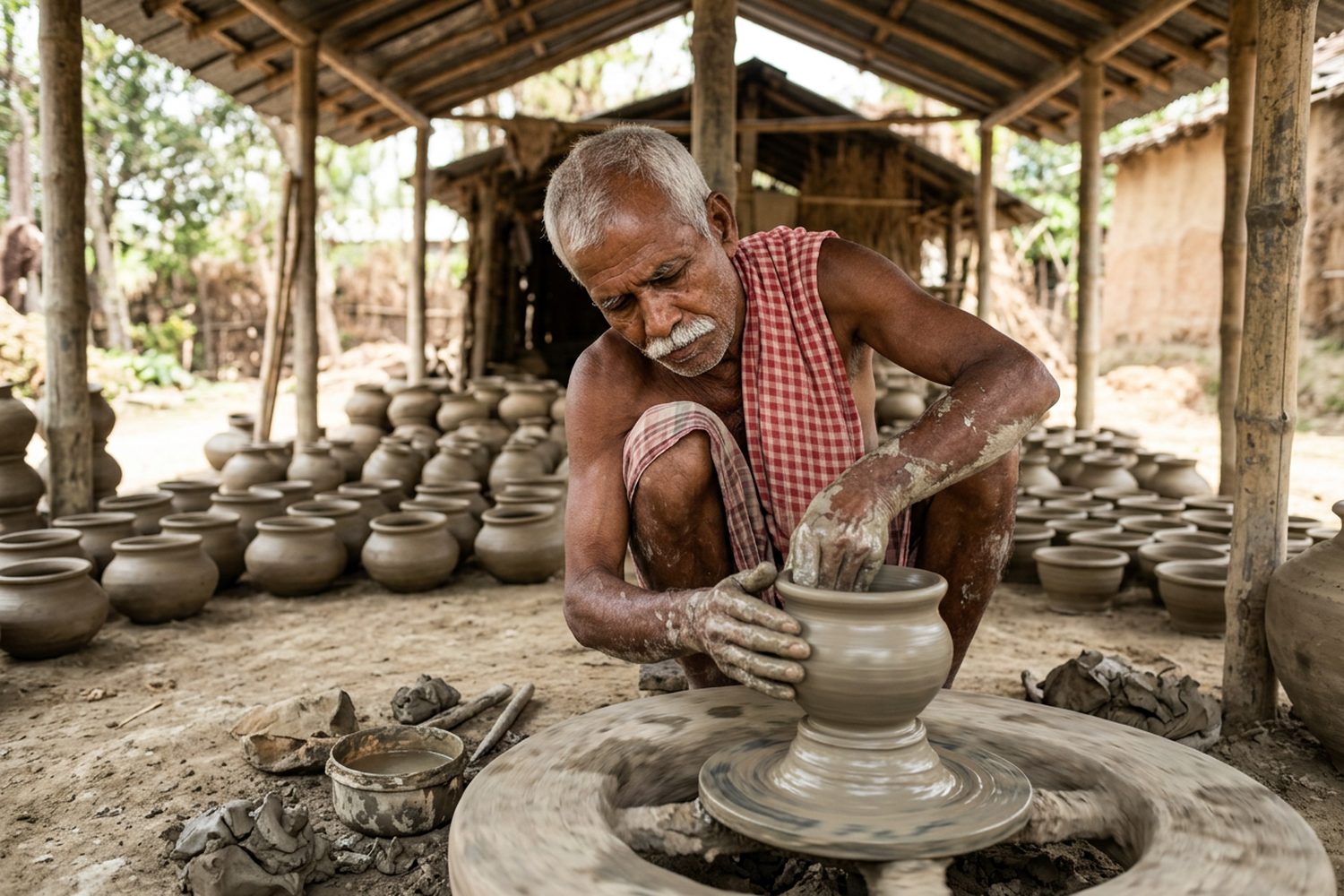
Most makers count the material and forget the rest: fuel, breakage, the trip to buy supplies, and their own days. A price built on clay alone loses money on every piece. Write down everything one batch costs, divide by the pieces that came out whole, and you have the making cost. It is the one number that tells you whether a trader's offer is a sale or a loss.
Material is the smallest part. Ask a potter what a cup costs and the answer is usually the clay and the glaze. Ask a weaver and it is the yarn. But a piece also eats fuel, colour, packing, the bus fare to the supplier and, above all, days of work. If those are left out, the price looks fair and the maker stays poor.
Work one batch on paper. Take a firing of 60 cups. Clay and glaze cost ₹1,200. Fuel for the kiln costs ₹900. The batch takes six days of work, and if a day of your skill is worth ₹500, that is ₹3,000. The batch has cost ₹5,100, not ₹1,200. Nothing in that sum is profit yet. It is only what went in.
Divide by what survived. Eight cups crack in the firing, so 52 can be sold. ₹5,100 divided by 52 is about ₹98 a cup. That is the making cost. Sell at ₹90 because the trader says clay is cheap, and you have paid ₹8 from your own pocket for every cup you made. Sell at ₹180 and each cup leaves ₹82 for the months when orders are thin, a tool breaks, or a whole firing fails.
Keep the number where you will see it. In Crafto every product has a Making cost field beside its Price and its Wholesale price. Fill it once for each kind of piece, and correct it when yarn, clay or fuel becomes dearer. Only your own team can see it. Buyers see the price alone. The next time someone bargains at a mela, you will know how far down you can go, and where you must stop and let the buyer walk on.
More from the Crafto desk.

